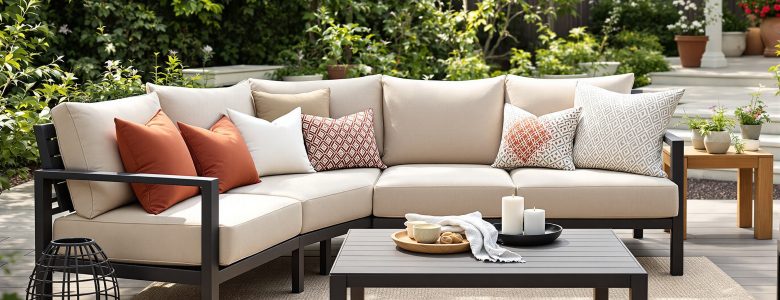
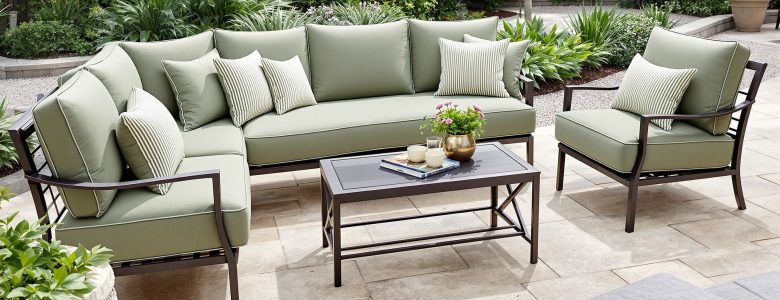
You unboxed the new pads, dropped them on the set, and took a step back. The color is right. The set still looks off. Too thin. Too puffy. A gap at the arm. A corner that will not sit in the wicker.
That is almost never “bad fabric.” It is a size that was never taken from your furniture. Ready-made replacements are cut for a SKU. Your sofa is not that SKU.
The usual reasons a pad misses
You measured the old cushion. Foam loses height. Covers grow. Copying a tired pad orders a smaller cushion than the frame can hold.
You bought a thickness that looked right in a thumbnail. Dining wants 2–3 inches so you still sit at table height. Deep seating wants 5–6. A 3-inch pad on a lounge sofa looks like a dining leftover.
The corners are wrong. A square boxed cushion on a round-arm wicker chair will hover. Rounded corners and a snug width are what make the pad look like it belongs.
Thickness by furniture type
- Dining chairs: 2 to 3 inches
- Benches: 2 to 4 inches
- Loveseats: 4 to 5 inches
- Deep seating: 5 to 6 inches
- Lounge / chaise: 5 to 8 inches, plus the full length of the recline
Those are starting points, not laws. If you like a tailored look, go thinner. If you sit for hours, go thicker and use a draining outdoor fill.
How we get a perfect fit
Measure the frame. Width, depth, back height if there is a back. Trapezoid seats need front and back widths. Enter the numbers in the designer. We cut within ½ inch. Ties keep a pad on a rocker or an open slat. A snug boxed seat on an enclosed sofa often stays put by fit alone.
If the collection is Tortuga, NCI, or another brand we pattern, use the replacement catalog. If it is not, do not force a “universal 24×24.” Custom is the universal size.